
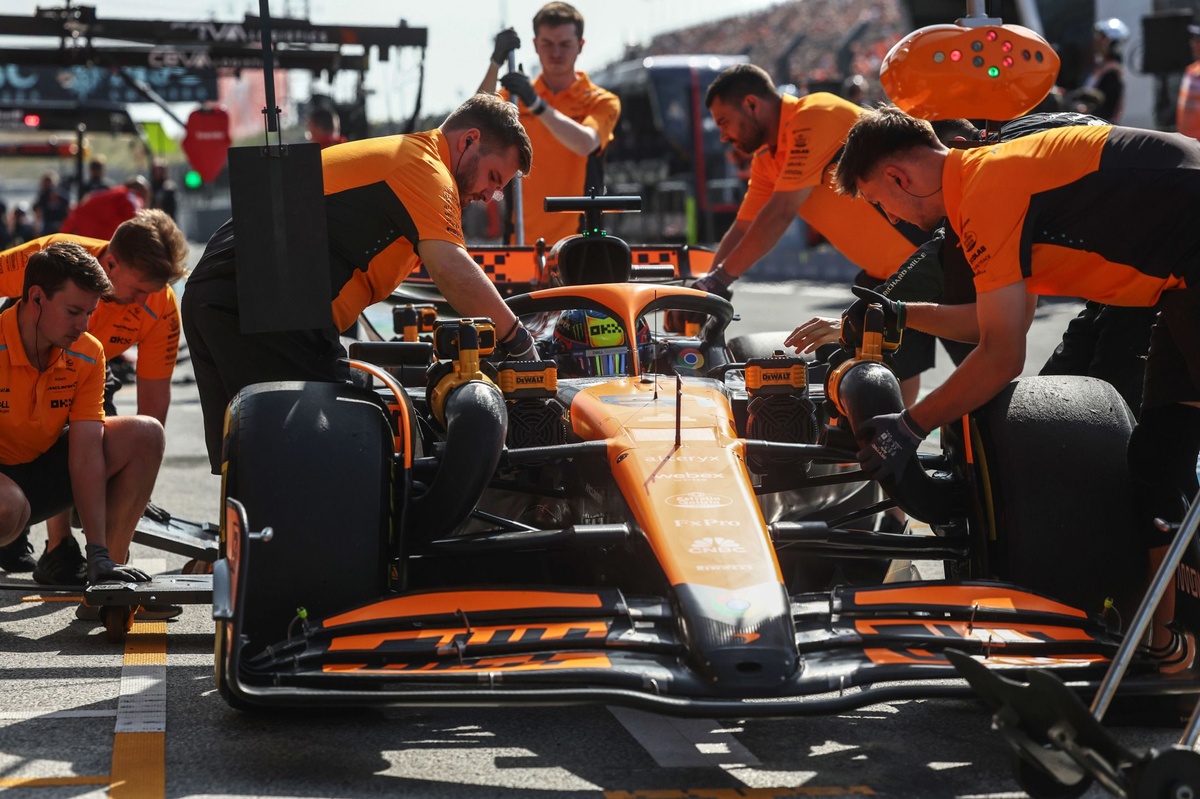
In an ambitious move to elevate its performance on the Formula 1 stage, McLaren recently unveiled a significant aerodynamic upgrade designed to compete directly with Red Bull Racing. Following a period without major developments, the team’s new enhancements to the MCL38 are aimed at refining its competitive edge, especially in aerodynamic efficiency.
The push for advancement comes after McLaren’s strong showing in the early part of the season, where they managed to stay competitive without introducing substantial changes. As the Dutch Grand Prix approaches, the excitement around McLaren's latest updates underscores their intent to close the performance gap with the current frontrunners.
Rob Marshall, McLaren's chief designer, expressed a mix of optimism and caution regarding the potential impact of these upgrades. “It over-delivered the Miami one, it was a bit of a surprise to us how successful it was,” said Marshall about their earlier improvements. He continued, “Hopefully, it's a decent chunk again, but it's less clear. There are some things we're not so certain about, some things are slightly more risky than others.”
The specifics of the upgrades reveal McLaren's strategic focus on fine-tuning the cars’ aerodynamics. A key modification is the revised brake duct scoop at the front. This change aims to achieve the crucial balance between necessary cooling performance and its effect on the airflow dynamics around the car. The design has been altered to enhance aerodynamic efficiency, creating a more compact and streamlined shape in the lower section without compromising cooling properties.
Additionally, adjustments to the front suspension fairings have been made to complement the redesigned brake ducts. This alteration seeks to optimize both the local and downstream aerodynamic performance of the car. The modifications extend to the MCL38's floor and edge wing, incorporating subtle adjustments to geometry and contouring, which could play a significant role in performance on the track.
“It’s going to be difficult to assess this weekend as well, I suspect…” Marshall acknowledged, alluding to potential weather impacts on how effectively these changes can be evaluated.
This cautious approach reflects a broader trend in Formula 1, where teams must balance innovation with the risks that come with untested components. Despite McLaren's readiness to challenge, they remain aware of the unpredictable nature of upgrades and their impact during race weekends.
Oscar Piastri, McLaren's promising young driver, has also shown confidence in the changes, hinting at the potential for these upgrades to enhance their competitiveness further. Yet, he echoes the sentiments of his teammate and the engineering team, recognizing the uncertain nature of new developments. Each modification brings both hope and the challenge of translating theoretical gains into real-world performance on the track.
As McLaren progresses through the season, the racing world watches closely. The team's decision to embrace a more adventurous upgrade strategy could either pay off in securing closer competition with Red Bull or serve as a reminder of the inherent risks involved in high-stakes racing engineering.
Looking ahead, McLaren aims to maintain its upward trajectory while managing expectations through continual refinement of its strategies and technologies. The upcoming races will test whether these latest improvements can propel the team into a more formidable position on the starting grid, presenting an exciting narrative for fans and competitors alike.