
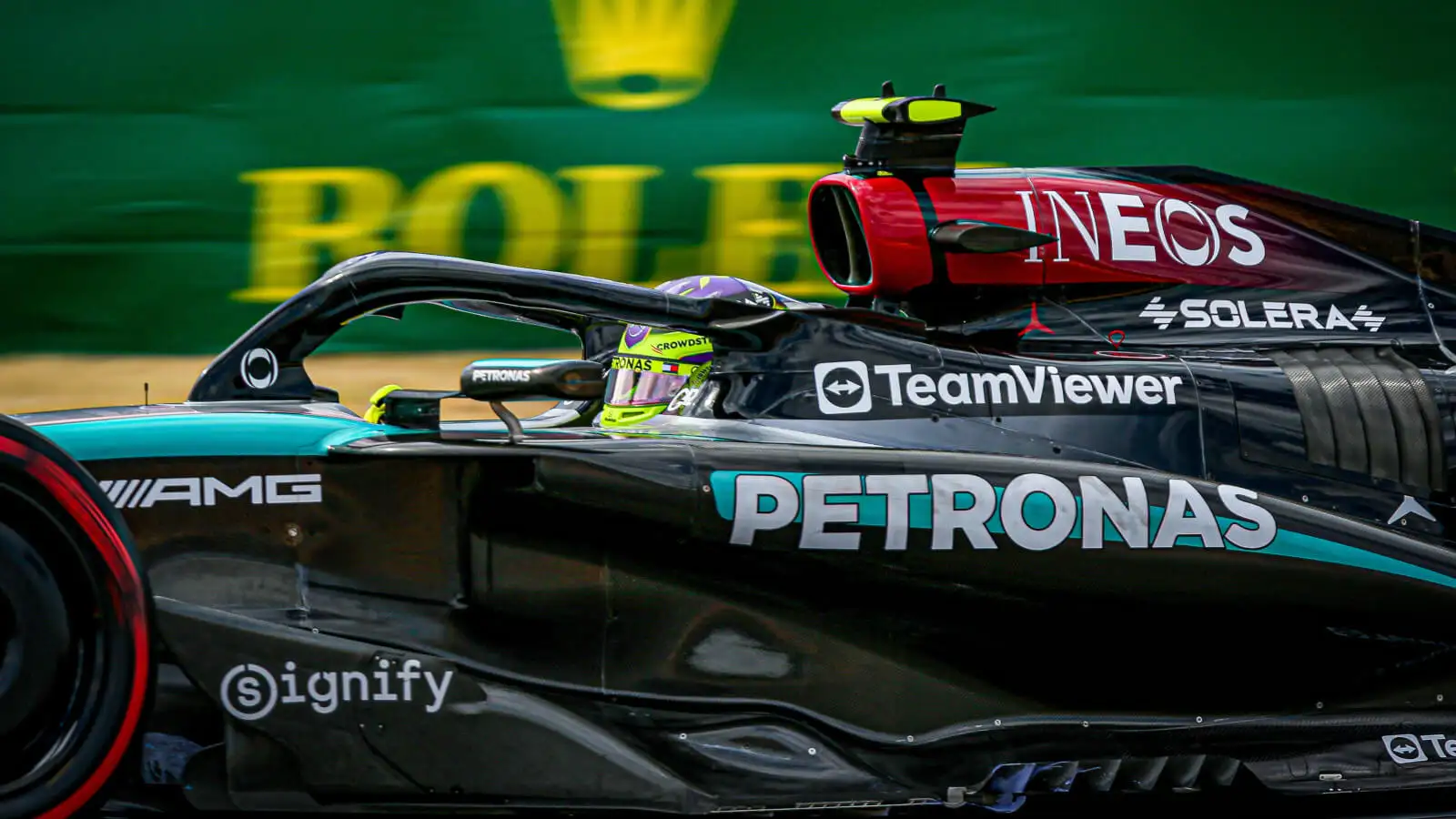
Mercedes made waves at the recent US Grand Prix by introducing significant upgrades to their W15. While the team secured only 15 points across both the sprint and main race, the modifications showcased the potential that Mercedes is striving to unleash amidst fierce competition from rivals.
In particular, the introduction of overbite sidepod inlets has drawn considerable attention. "This design aims to improve the airflow over the top of the sidepod, directing it to crucial aerodynamic components at the rear of the car," explained a team engineer. This type of inlet is characterized by a longer upper edge, a feature initially pioneered by Red Bull earlier in the season.
The modifications are crucial for airflow management, with better directional control over the car’s dirty air. The extended upper edge is strategically designed to prevent excess air from moving over the sidepod and instead pushes it towards the undercut region. This allows for enhanced optimization as the airflow moves towards the diffuser and beam wing.
The overall structure of the inlet has been modified to be narrower, which contributes to a more aggressive undercut compared to other teams, yielding a possibly more complex internal cooling system. Such airflow improvements could provide the team with a competitive edge, particularly in controlling airflow from the rear wheels.
Accompanying the sidepod design were adjustments to the engine cover geometry, which were notably visible from the rear of the vehicle. These alterations seem to enhance the cooling capabilities of the power unit, a change that may have been influenced by the new sidepod design.
Along with the sidepod updates, Mercedes also introduced a reconfigured front wing. As a key component of the car's aerodynamics, this redesign aims to better integrate the car’s overall enhancements. "One of the front wing changes includes an added element, a separator between the last and second-last flap," described a team member involved in the wing’s development. This adjustment is intended to improve the wing's effectiveness, particularly the sidewash effect that directs dirty air away from essential aerodynamic features.
While not officially confirmed, there's speculation that the flex of the front wing may also have been a focus as the FIA continues to scrutinize these elements.
Initial data from the Austin sprint qualifying session offered encouraging signs regarding the effectiveness of these upgrades. Lewis Hamilton posted the fastest time in the first sector, while teammate George Russell achieved the best second sector time. "The W15’s strength can be seen on the straights, indicated by Russell’s top speed of 330 km/h," remarked a performance analyst.
Despite this promising start, Mercedes encountered difficulties throughout the race weekend. Their struggle for pace against teams like Ferrari, McLaren, and Red Bull became apparent. Hamilton’s early exit in Q1 and Russell’s ensuing incident underscored the challenges: the W15 appeared unstable, marking a concerning trend.
The unusual crash by Hamilton during the race raised eyebrows, as it signaled potential underlying issues with rear-end stability. Recognized for his consistency, Hamilton's loss of control was atypical, indicating that further adjustments might still be necessary.
Mercedes' engineers now face the task of fine-tuning the car’s balance in line with the new aerodynamic upgrades. The limited preparation time, evident in only having one free practice session, has undoubtedly compounded these difficulties.
As the racing season progresses, it will be crucial for Mercedes to harness the potential of these updates to remain competitive. The adjustments to the W15 reflect a determined response to the challenges they face but highlight the ongoing need for refinement in performance before the next races.