
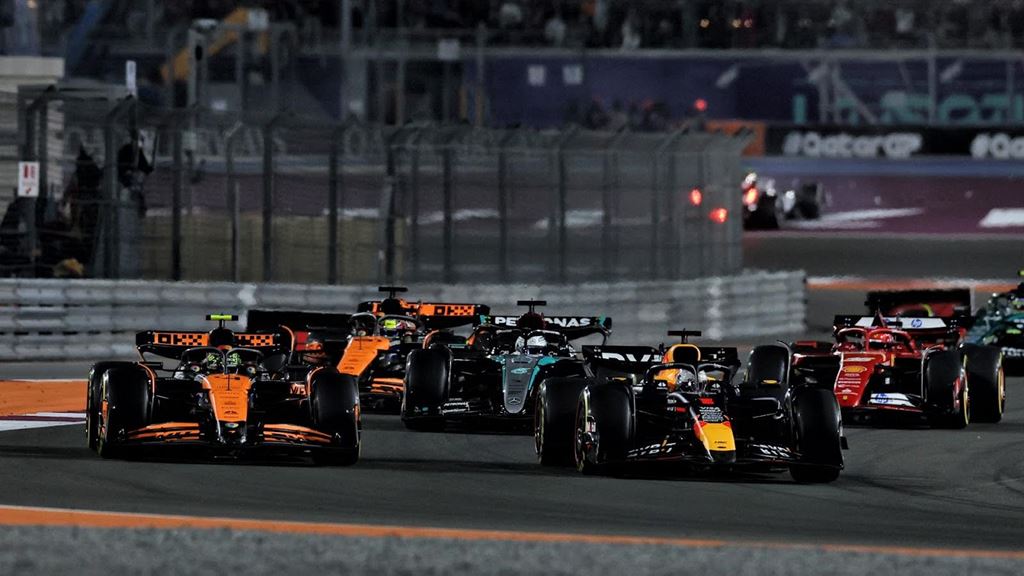
The 2024 Formula 1 World Championship was highlighted by a fierce technical competition, signaling the end of Red Bull's two-year dominance that characterized 2022 and 2023. Teams such as McLaren, Ferrari, and Mercedes emerged, winning races and changing the competitive landscape.
This season proved to be particularly historic, as McLaren captured its first constructors’ championship since 1998, breaking a 26-year drought. Notably, four teams—Red Bull, Ferrari, McLaren, and Mercedes—each achieved one-two finishes within the same season, something unseen in Formula 1 history.
Moreover, a record-breaking seven different drivers claimed victory in more than one Grand Prix, making this season a standout in its competitive depth. For the 12th time in F1 history, the team that secured the constructors’ championship did not feature the world drivers’ champion.
The transformation of the cars in 2024 played a significant role in this season's outcomes. In examining the alterations made by the top teams, McLaren's Lando Norris was a key player in this shift, having secured numerous points, yet ultimately falling short of the drivers' championship title to Red Bull's Max Verstappen.
Red Bull's Technological Evolution
Red Bull's 2024 model, the RB20, marked a departure from its predecessor. "If the 2023 Red Bull RB19 was a deep evolution of the RB18, the RB20 was a very different single-seater from the start," disclosed Red Bull technical director Pierre Wache. The car unveiled a radically different cooling system and a new bodywork design characterized by innovative 'cannons' and 'shark-shaped' sidepod inlets.
The car's performance was strong initially, as evidenced by its one-two finishes in three of the first four races. However, as the season progressed, it became evident that the RB20 had a narrow development curve. "It was getting difficult to add downforce to the car without compromising car behaviour," noted Wache.
Red Bull's pivotal updates included a new engine cover, introduced during the Hungarian Grand Prix, which removed the cooling cannons and aimed to enhance performance on faster circuits. While changes to other components lagged, the focus on improving aerodynamic efficiency gained momentum with modifications added throughout the season.
Key upgrades for Red Bull included: 1. New additional cooling inlets for better downforce efficiency without increased drag. 2. A revamped front wing design that enhanced aerodynamic capability. 3. Updates to the floor and diffuser that maximized ground effect efficiency while adhering to the regulations.
Ferrari's Road to Improvement
Ferrari's SF-24 was a significant but measured redesign compared to its predecessors. The team initially relied on pullrod rear suspension while adapting to a new philosophy that bypassed the inwash sidepods. This configuration started strong but necessitated a more aggressive upgrade strategy to keep pace with the rapid developments seen in Red Bull.
Ferrari implemented substantial changes after the Imola race, aiming to elevate its competitiveness. “We had to bring our upgrades quickly and decisively to close the gap,” mentioned a Ferrari engineer, highlighting the urgency felt within the team to match Red Bull's prowess.
Throughout the year, Ferrari continuously worked on its aerodynamics, making subtle changes that helped in optimizing performance during key races.
Outlook for 2025
As the 2024 season concludes, the focus for teams will shift towards refining their technologies ahead of the 2025 championship. Red Bull will need to rethink its design approach, seeking alternatives to address the development curve issues it faced. McLaren and Ferrari, flush with new ideas and a burgeoning competitive spirit, must maintain their momentum while capitalizing on recent successes.
With the evolving narratives of car technology and competitive dynamics, the 2025 season promises to be yet another thrilling chapter in the Formula 1 saga, setting the stage for more intense rivalries and breathtaking racing action.